

Apartment Moving Tips for Vancouver Renters
Apartment and condo moves in Vancouver come with a unique set of challenges that you won't face when moving a house. Elevator bookings, parking restrictions, building rules, damage deposits, and tight hallways all add layers of complexity — especially in Vancouver's dense urban core, Burnaby's high-rise corridors, and Richmond's newer condo towers.
If you're a renter preparing to move in Metro Vancouver, here's everything you need to know to make your apartment move as smooth and stress-free as possible.
Book the Elevator Early — This Is Non-Negotiable
This is the single most important thing you can do for a condo or apartment move in Vancouver.
Most multi-storey residential buildings in Metro Vancouver — including buildings in downtown Vancouver, Yaletown, Coal Harbour, Burnaby, New Westminster, and Richmond — require you to book the elevator in advance for moving. Buildings typically have a designated "move elevator" or restrict moves to specific hours (often 8 AM–5 PM on weekdays, or limited weekend windows).
What to do:
- Contact your building manager or strata council as soon as you have a moving date
- Book the elevator for a specific time window — usually 2–4 hours
- Confirm the building's move-in/move-out rules (some require a damage deposit for the elevator and common areas)
- Share the elevator booking time with your moving company so they can plan accordingly
Failing to book the elevator can mean your movers are stuck waiting — and you're paying for that time. In some buildings, if the elevator isn't booked, the move simply can't proceed until it is. Don't let this happen to you.
Book at both buildings. If you're moving into a new condo or apartment, you need to book the elevator at your new building as well. Don't assume it's available — call ahead.
Apply for a Parking Permit for the Moving Truck
Moving trucks are large. In Vancouver's dense neighbourhoods — Kitsilano, Mount Pleasant, Commercial Drive, East Van, the West End, Yaletown — finding a legal parking spot for a 5-ton moving truck is nearly impossible without a permit.
City of Vancouver: You can apply for a temporary no-parking permit through the City of Vancouver's website. These permits reserve a section of street parking for your moving truck. Apply at least 5–7 business days in advance — don't leave this until the last minute.
Other municipalities: Burnaby, Richmond, Surrey, Coquitlam, and other Metro Vancouver cities have similar permit processes. Check with your local city hall or municipal website for the specific process and timeline.
Underground parkades: If your building has underground parking, check whether the moving truck can access it. Most standard moving trucks are too tall for underground parkades — confirm ceiling heights before assuming this is an option. The last thing you want is a truck stuck at the entrance of your building's parkade on moving day.
What happens without a permit: Without a parking permit, your movers may have to park further away from your building — adding significant time (and cost) to the job as they carry items over a longer distance. In some cases, the truck may receive a parking ticket, which is your responsibility.
Know Your Building's Move-Out Rules
Every strata building and rental property in Vancouver has its own rules around moving. Before your move date, confirm:
- Approved moving hours — many buildings restrict moves to weekdays or specific time windows (e.g., 8 AM–5 PM). Weekend moves may not be permitted at all in some buildings.
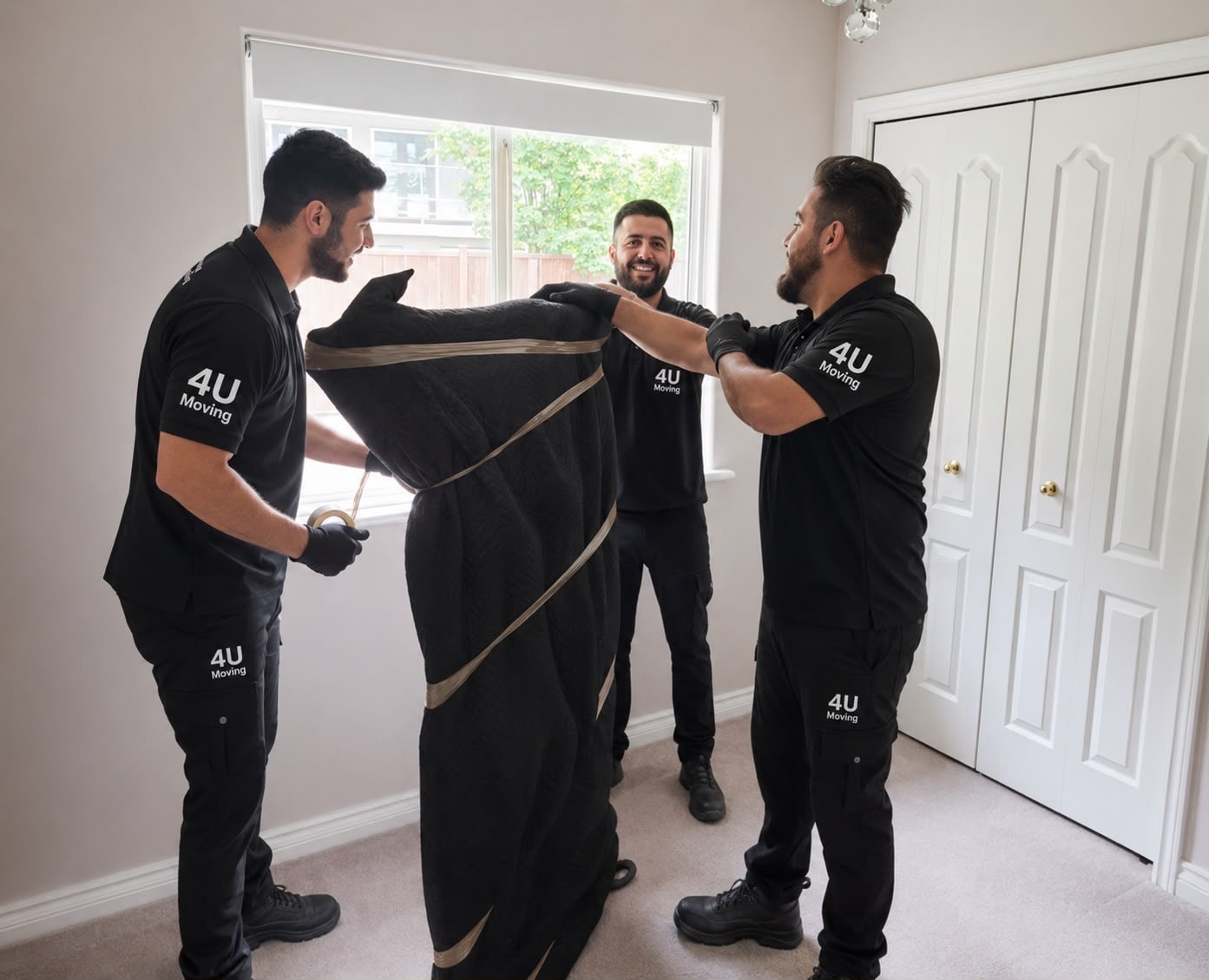
- Elevator padding requirements — most buildings require you to pad the elevator with moving blankets (your movers will have these)
- Common area protection — some buildings require floor runners or wall padding in hallways and lobbies
- Damage deposit — some buildings charge a refundable damage deposit for moves; get this in writing and keep your receipt
- Loading zone access — confirm where the truck can legally park and load/unload
- Notice requirements — some buildings require written notice of your move date
Getting these details wrong can result in your move being delayed or stopped entirely. Call your building manager at least 2–3 weeks before your move date.
Understand Your BC Damage Deposit Rights
Under the BC Residential Tenancy Act, your landlord can charge a damage deposit of up to half a month's rent. When you move out, your landlord has 15 days to either return the deposit in full or apply to dispute it through the Residential Tenancy Branch.
To protect your deposit:
- Take photos and video of every room, wall, floor, and fixture when you move in — and again when you move out
- Get a written condition inspection report signed by both you and your landlord at move-in and move-out. If your landlord refuses to do a move-out inspection, they may lose the right to claim against your deposit.
- Clean the unit thoroughly before handing over the keys — professional cleaning is often worth the cost
- Document any pre-existing damage in writing at the start of your tenancy
- Return all keys, fobs, and parking passes on your last day
If your landlord tries to withhold your deposit unfairly, you can dispute it through the BC Residential Tenancy Branch at no cost. The process is straightforward and renters win a significant portion of these disputes.
Give Proper Notice Under the BC Tenancy Act
In BC, most month-to-month tenants must give one full rental period's notice (typically one month) in writing before moving out. For fixed-term leases, check your lease agreement — you may need to give notice before the end of the term or negotiate an early termination with your landlord.
Always give notice in writing (email is acceptable and creates a paper trail) and keep a copy. Verbal notice is not sufficient under BC tenancy law.
Important: If you're on a fixed-term lease and want to leave before it ends, you'll need your landlord's agreement. Breaking a fixed-term lease without agreement can result in you being responsible for rent until the unit is re-rented or the lease ends — whichever comes first.
Tips for Moving Out of a High-Rise in Vancouver
High-rise moves in Vancouver, Burnaby, and Richmond have their own set of challenges that require extra planning and the right moving company.
Long Carries
In many downtown Vancouver and Burnaby high-rises, the distance from the elevator to your suite — and from the building entrance to the loading zone — can be significant. Long carries slow the move down and add to your hourly cost.
Tip: Ask your movers to bring extra dollies and hand trucks to minimize trips. At 4 You Moving, we always come equipped with the right tools for high-rise moves.
Tight Hallways and Corners
Older buildings in Vancouver's West End, Kitsilano, and East Van often have narrow hallways and tight corners. Oversized furniture like sectional sofas, king-size bed frames, and large wardrobes can be difficult to manoeuvre.
Tip: Measure your furniture and your hallways before moving day. If something won't fit through the hallway, you may need to disassemble it or use the stairs. Our crew has experience with tight-space moves across Metro Vancouver — let us know about any tricky areas when you book.
Noise Restrictions
Many Vancouver condo buildings have noise restrictions after 10 PM and before 8 AM. Plan your move to finish well within these windows. If your move runs long, communicate with your building manager — don't just keep going and hope no one complains.
Service Elevators vs. Passenger Elevators
Many larger buildings have a dedicated service elevator for moves. These are typically larger and more robust than passenger elevators. Confirm with your building manager which elevator you should use — using the wrong one can result in damage charges.
Tips for Moving Into a New Vancouver Apartment
Moving into a new place comes with its own checklist:
- Book the elevator at your new building as well — don't assume it's available
- Get the building's move-in rules from your new landlord or strata manager before moving day
- Do a condition inspection on arrival and document everything in writing — take photos of every room, wall, floor, and fixture before you move anything in
- Locate the electrical panel, water shutoff, and intercom on your first day
- Set up utilities before you arrive — BC Hydro, FortisBC, and internet can take a few days to activate. Don't arrive at your new home to find no power or hot water.
- Change the locks if you're renting — ask your landlord's permission first, but it's a reasonable request for security
The Best Time to Move Out of a Vancouver Apartment
Avoid end of month: The last 3–5 days of the month are the busiest time for movers in Metro Vancouver. Most BC leases end on the last day of the month, which means everyone is moving at the same time. Elevators are booked solid, parking permits are harder to get, and moving companies are in high demand.
Mid-month is ideal: If your landlord agrees, moving mid-month means less competition for elevators, easier parking, and more flexibility with your moving company. It's worth asking — many landlords are accommodating if you give enough notice.
Avoid summer weekends: June, July, and August are peak moving season in Vancouver. If you must move in summer, book your movers at least 3–4 weeks in advance. For a complete guide to timing your move, see our article on the best time to move in BC.
July 1 is the busiest day of the year: In BC, many leases end on June 30, making July 1 one of the single busiest moving days in Metro Vancouver. If your move falls on or near July 1, book your movers 6–8 weeks in advance.
Packing Tips Specific to Apartment Moves
Apartment moves often involve more vertical space and less storage than house moves. Here are some packing tips specific to condo and apartment living:
Use wardrobe boxes for closets. Most apartments have smaller closets than houses — wardrobe boxes let you move hanging clothes without folding, saving significant time.
Pack kitchen items carefully. Apartment kitchens are often compact, which means dishes and cookware are packed tightly. Wrap every piece individually to prevent breakage.
Disassemble large furniture. In tight hallways and small elevators, assembled furniture often won't fit. Disassemble bed frames, bookshelves, and large desks the night before your move.
Label boxes with floor and room. If you're moving into a multi-storey home or a building with multiple storage areas, label boxes with both the destination floor and room.
Choosing the Right Movers for Your Vancouver Apartment Move
Not all moving companies in Metro Vancouver have experience with condo and apartment moves. When choosing a mover, look for:
- Experience with high-rise and condo moves — ask specifically about elevator moves and tight-space experience
- Proper equipment — dollies, hand trucks, furniture sliders, and moving blankets
- Licensed and insured — your mover should carry Commercial General Liability Insurance and WorkSafeBC coverage. See our insurance coverage details
- Transparent pricing — no surprise fees for stairs, long carries, or elevator waits. Check our pricing page for full details
- Strong Google reviews — look for detailed, genuine feedback from Vancouver renters specifically
4 You Moving: Vancouver's Apartment Moving Specialists
At 4 You Moving Services Ltd., we've completed hundreds of apartment and condo moves across Metro Vancouver — from downtown Vancouver high-rises to Burnaby towers to Richmond condos. We know the buildings, the rules, and the logistics.
We're available 7 days a week, fully licensed and insured, and trusted by 260+ Vancouver renters with five-star Google reviews. Whether you're moving a studio in Yaletown or a 2-bedroom in Metrotown, we've got you covered.
Get your free quote today and let us handle your Vancouver apartment move.

More helpful resources:
- Moving Checklist: Everything You Need Before Moving Day
- How Much Does Moving Cost in Vancouver?
- How To Prepare Your Home For Professional Movers
- Our Residential Moving Services
- Service Areas We Cover
Frequently Asked Questions
How far in advance should I book movers for an apartment move in Vancouver? For peak season (May–September) book 3–4 weeks ahead. Off-peak, 1–2 weeks is usually enough. Month-end dates fill fastest — book early if your lease ends on the 30th or 31st.
Do Vancouver movers charge extra for high-rise buildings? Most charge the same hourly rate but the job takes longer due to elevator waits and longer carry distances. Book the elevator in advance and confirm the building's move-in window to keep the job on schedule.
What is the minimum charge for a Vancouver apartment move? 4 You Moving has a 2-hour minimum plus a flat 1-hour travel fee. Most studio and 1-bedroom apartment moves in Metro Vancouver take 2–3 hours total.
Can movers disassemble and reassemble IKEA furniture? Yes. Most professional movers will disassemble and reassemble standard furniture as part of the move. Mention any large or complex pieces when you get your quote so the crew can plan accordingly.
What should I do with my parking spot on moving day? Reserve the loading zone or visitor parking nearest your building entrance for the moving truck. If your building requires a parking permit for large vehicles, arrange it with building management at least a week before your move.
Is it worth hiring movers for a small apartment move? Yes — even for a studio, professional movers are faster, safer for your belongings, and often cheaper than renting a truck and doing it yourself once you factor in time, fuel, and the risk of damage.
<script type="application/ld+json"> { "@context": "https://schema.org", "@type": "FAQPage", "mainEntity": [ {"question": "How far in advance should I book movers for an apartment move in Vancouver?", "answer": "For peak season (May–September) book 3–4 weeks ahead. Off-peak, 1–2 weeks is usually enough. Month-end dates fill fastest — book early if your lease ends on the 30th or 31st."}, {"question": "Do Vancouver movers charge extra for high-rise buildings?", "answer": "Most charge the same hourly rate but the job takes longer due to elevator waits and longer carry distances. Book the elevator in advance and confirm the building's move-in window to keep the job on schedule."}, {"question": "What is the minimum charge for a Vancouver apartment move?", "answer": "4 You Moving has a 2-hour minimum plus a flat 1-hour travel fee. Most studio and 1-bedroom apartment moves in Metro Vancouver take 2–3 hours total."}, {"question": "Can movers disassemble and reassemble IKEA furniture?", "answer": "Yes. Most professional movers will disassemble and reassemble standard furniture as part of the move. Mention any large or complex pieces when you get your quote so the crew can plan accordingly."}, {"question": "What should I do with my parking spot on moving day?", "answer": "Reserve the loading zone or visitor parking nearest your building entrance for the moving truck. If your building requires a parking permit for large vehicles, arrange it with building management at least a week before your move."}, {"question": "Is it worth hiring movers for a small apartment move?", "answer": "Yes — even for a studio, professional movers are faster, safer for your belongings, and often cheaper than renting a truck and doing it yourself once you factor in time, fuel, and the risk of damage."} ] } </script>